Showing posts with label adverts. Show all posts

Tuesday, 13 August 2013

His master's tone of voice

This recent Marketing Week post on corporate tone of voice caught my eye. This figure is particularly striking — "brands [globally] spend $13bn (£8.7bn) a year on visual identity and just $2bn on verbal identity" — but it's encouraging to read of brands like O2 and Nationwide taking the war on jargon more seriously (especially as I'm a customer of both).

I wouldn't say O2's 'be more dog' billboards tell us anything useful about the clarity of the company's communications, though: the test is how easily customers can read small print and speak to call centres, not what they take from an abstract ad campaign. Attending to those small details might not win many headlines or awards, but it will help a brand quietly build a good reputation. Equally, we shouldn't assume that because a company's outlook is irreverent and unfussy it necessarily produces clear, consistent messages or makes the most effective use of communication channels. Corporate mission statements that read like Facebook status updates tend to grate.

A common complaint is that the language organisations use is often shaped by backroom technicians rather than frontline communicators, who end up having to work as translators so the public can understand what their colleagues are on about. If it's not possible to involve sales and marketing staff in the terminology process from the start of a project, it can at least help to have a comprehensive style guide that acts as a jargon-to-plain English dictionary.

This is all particularly true on social media. Corporate communicators are nowadays encouraged to speak to customers in their own language online; this is sensible, but it requires a solid grasp of who those customers are and what their language is like. As with every other aspect of the internet, risks and potential rewards are both magnified.

A final related point is that marketing folk tend to be more aware of the need to avoid jargon than senior management, who often need to be persuaded of the value of both plain English and social media. The best managers are instinctively open to such developments, won't treat them as tick-box exercises and will both invest and take part in relevant training: but this is more proof that good external communication depends on good internal communication.

Brands that aren't aware of these issues often end up annoying the public and losing customers. Now, why not have a look at a fellow comms guru's advice on a few things firms can do to avoid annoying journalists and losing press coverage?

Wednesday, 17 April 2013

The political scientist

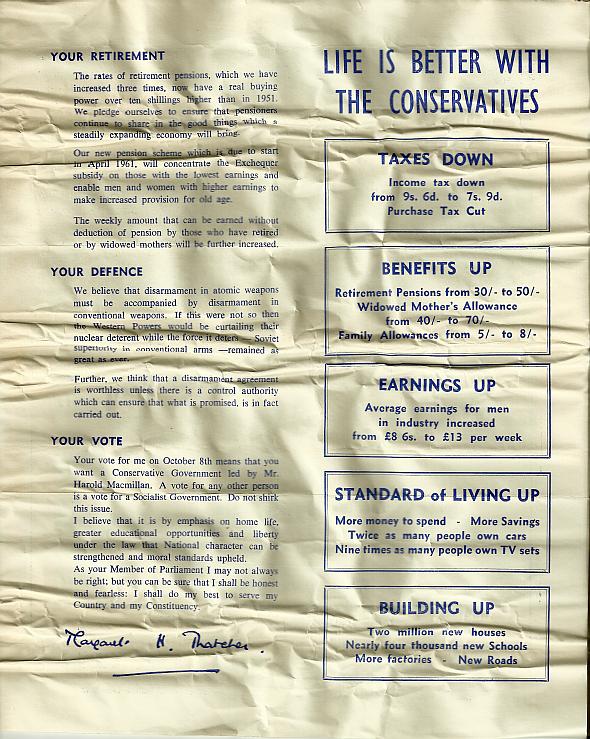
After Margaret Thatcher died, this leaflet from her third (but first successful) parliamentary campaign did the rounds on Twitter:

As an editor, I can't help noticing that there are four pages of the stuff, not to mention the usual assortment of random and pointless capitalisations (some things don't change).

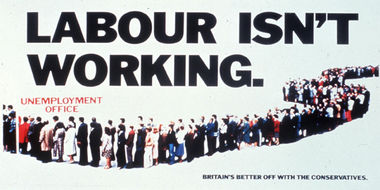
I doubt, by the end of her political career, she would have stood on a platform of 'BENEFITS UP' — but I think, policy aside, it tells us a lot about how political communication changed in the second half of the 20th century.  Fast forward to her leadership of the Conservative Party and her time as prime minister, and compare her first endearingly amateur leaflet with these very influential, clear and direct adverts.  First, the Saatchi campaign that got her elected:


Then the advert I most associate with her time in office, 'AIDS: Don't Die of Ignorance':


We don't tend to think of Thatcher as one of the great political communicators — admirers and detractors both point more to her unshakeable ideology and her force of personality as the secrets of her success — but we might remember how much of the professionalised media management Blair, Mandelson and Campbell perfected in the New Labour era began with her and her press secretary Bernard Ingham.  Perhaps, also, her dislike for nuance, subtlety and intellectual contortion allowed her to present simplified, easily understood messages in a way that has often eluded highbrow leftwing opponents.

The one epitaph being consistently applied by both friends and enemies is that 'you always knew what she stood for'.  In politics I'd prefer to live by Keynes' maxim, and my instincts would always favour consensus over a 51% strategy: but we can't deny the power that the Thatcher brand held for so many people for a remarkably long time.  The appeal of that uncomplicated approach, and the way her image personified her ideas, surely holds lessons for today's corporate and organisational communicators.  Like Supermac, and in a way her biggest rivals Tarzan and the Welsh Windbag never matched, the Iron Lady embraced an opponent's epithet and turned it greatly to her own advantage.

However, I think today marks the moment the brand overreached itself; achieved Thatcheration point.  A ceremonial funeral (a state funeral in all but name), complete with several hundred serving members of the armed forces, a cancellation of PMQs and a silencing of Big Ben, seems to me fitting only for a head of state, not a former head of government.  That conservatives fail to grasp the difference shows the hold she still has on their worldview.

I hope, then, I won't upset anyone by suggesting that now is the time to lay the brand to rest, not to immortalise it.